
Stone Restoration Contractor in Manhattan
Historical preservation and repair of limestone, bluestone, cast stone sills, lintels, and decorative ornaments.
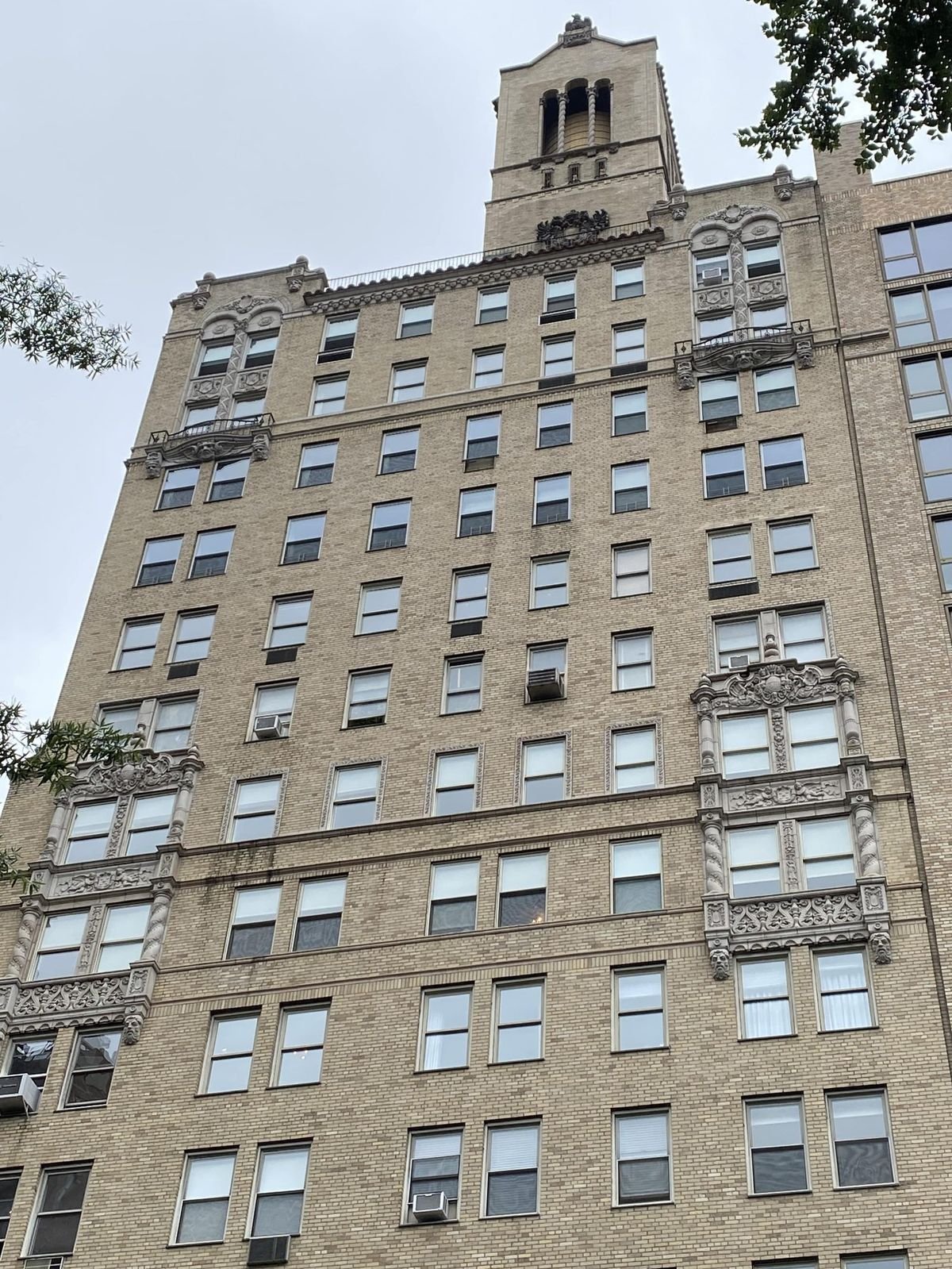
Manhattan’s pre-war building stock is defined by its stone. Limestone cornices, carved sandstone keystones, bluestone stoops, and intricate cast stone ornamental friezes are not decorative afterthoughts—they are load-bearing and weatherproofing elements that have protected buildings for over a century. When these elements deteriorate, the consequences range from cosmetic loss to structural failure. MC Construction Consulting delivers specialist stone restoration services that reverse that deterioration at the material level, restoring original form, function, and surface character without compromise.
As a stone restoration NYC specialist with over two decades of Manhattan project experience, we have worked on everything from individual brownstone lintel replacements to full-building limestone envelope restorations on Landmarks-designated co-op buildings on the Upper West Side, Carnegie Hill, and the Upper East Side Historic Districts.
- ✓ LPC HISTORIC DISTRICT APPROVED
- ✓ LIMESTONE & BLUESTONE SPECIALISTS
- ✓ FULLY INSURED
- ✓ 20+ YEARS IN NYC
Stone Restoration Manhattan
Acid rain, diesel exhaust particulates, and cyclical freeze-thaw moisture expansion are the three primary forces that destroy historic limestone, sandstone, and cast stone on Manhattan building facades-and they operate simultaneously, compounding each other’s damage year over year. Manhattan’s urban atmosphere contains elevated concentrations of sulfur dioxide and nitrogen oxide from traffic and building mechanical systems. These compounds react with rainwater to form dilute sulfuric and nitric acids that dissolve the calcium carbonate matrix of limestone and sandstone, converting solid stone surface to a soft, powdery calcium sulfate crust that washes away in subsequent rains.
The resulting surface recession exposes fresh stone to the same chemical attack, accelerating the process and eventually reaching the point where carved detail-a leaf, a scroll, a human face-loses sufficient relief to be legible. On horizontal elements like sills, copings, and cornices, this process is accelerated by standing water: pooled water held against the stone face dissolves it from the front while simultaneously infiltrating through micro-cracks and expanding during winter freezes with enough force to spall large sections of stone from the back.
Lintels and sills on Manhattan townhouses and pre-war apartment buildings are the highest-consequence failure points. A cracked lintel is not a cosmetic issue-it is a structural element carrying the masonry load of the wall above the window opening. When a lintel fails progressively, the surrounding brickwork begins to arch over the opening, creating visible stair-step cracking in the mortar joints of the brick above that is often misdiagnosed as simple settlement. The underlying cause is always the failed stone support.
The Landmarks Preservation Commission mandates that stone repairs on Manhattan historic district buildings replicate the original material’s color, texture, finish, and profile. This means that standard cementitious patching compounds-the default repair used by non-specialist contractors-are categorically prohibited on LPC-regulated facades. The only compliant solutions are natural stone replacement matched to the original quarry source, or purpose-formulated stone consolidants and repair mortars developed specifically for heritage masonry applications.
How does limestone repair in Manhattan, NYC restore original detail without replacing the entire element?
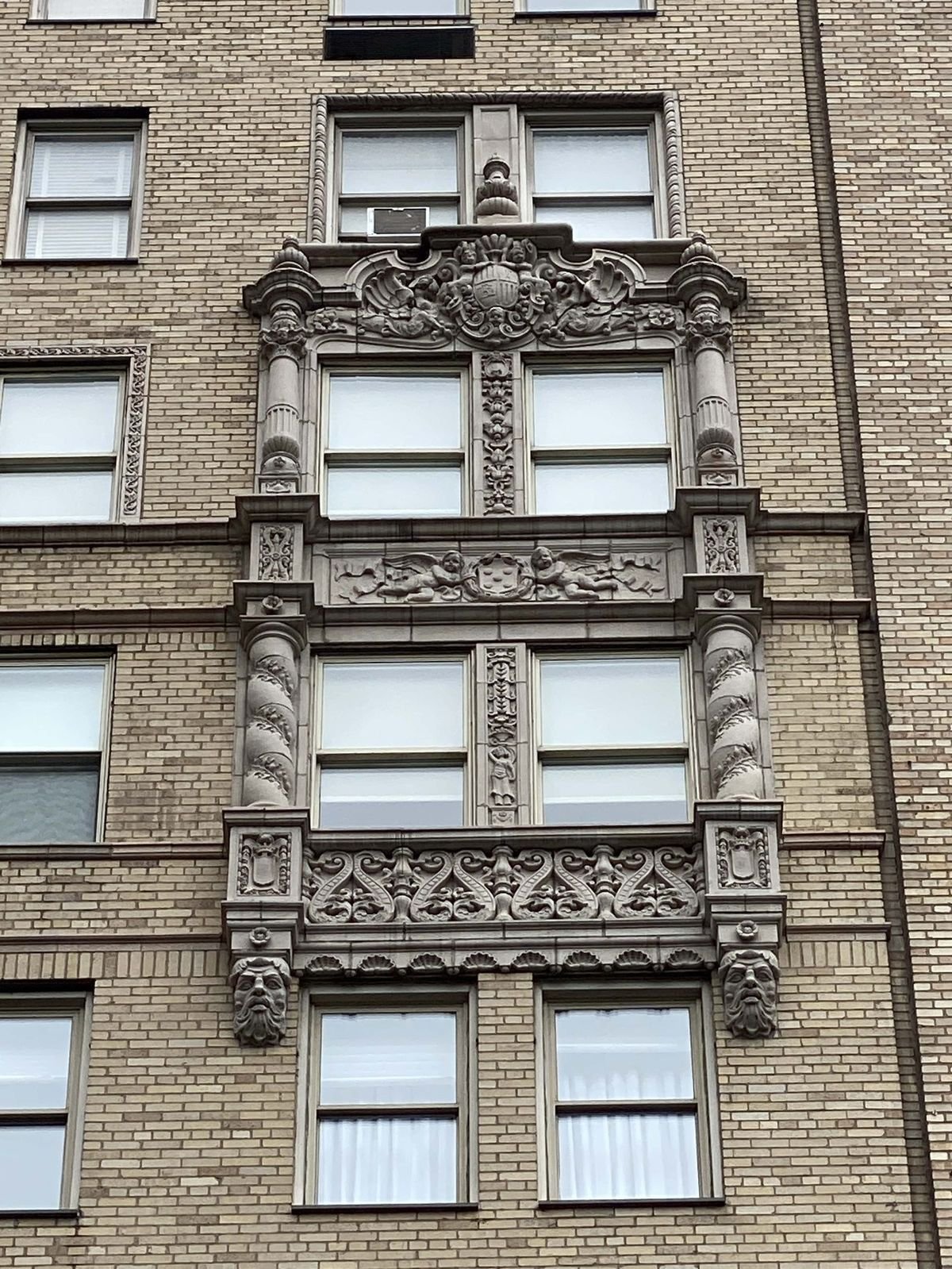
Limestone repair in Manhattan, NYC restores original carved detail and structural integrity through a three-stage process: stone consolidation to re-harden deteriorated surface material, profile repair using laboratory-matched stone repair mortar to rebuild lost sections, and surface finish treatment to match the original color and texture-all without removing the original stone element. This approach is LPC-compliant, structurally equivalent to stone replacement in most cases, and significantly less disruptive and costly than full stone unit replacement.
Our stone matching process begins with petrographic analysis: a small core sample of the existing stone is sent to a specialist conservation laboratory that determines the mineral composition, grain size distribution, and porosity profile of the original material. We then select or formulate a repair mortar whose physical properties-compressive strength, vapor permeability, thermal expansion coefficient, and color-match those of the parent stone. A mortar that is too strong will cause the surrounding historic stone to crack; one that is too porous will retain water. The match must be precise on both dimensions.
For high end renovation contractor Manhattan projects where full stone unit replacement is required-as is often the case with structurally compromised lintels or severely spalled sill units-we source replacement stone from quarries that supply the specific formation used in the original construction. New York City’s pre-war buildings were built predominantly from Indiana limestone, Ohio sandstone, and local bluestone, all of which remain available from active quarries that can match color, bedding orientation, and finish texture to the original specification.
For sidewalk and stoop restoration, we also provide specialist NYC concrete sidewalk repair services that coordinate with bluestone work to deliver a seamless transition between restored stone elements and compliant concrete infrastructure.
Why does stone restoration in Manhattan historic districts require a specialist contractor?
Stone restoration in Manhattan’s historic districts requires a specialist contractor because the LPC evaluates not just the proposed repair method but the contractor’s documented track record with the specific material and technique involved-and will reject permit applications from contractors who cannot demonstrate competence with heritage stone work. MC Construction has produced successful LPC approval packages for limestone, sandstone, cast stone, granite, and bluestone projects across Manhattan’s most demanding historic districts, including Greenwich Village, Carnegie Hill, Riverside-West End Avenue, and the Upper East Side Historic District.
Our crews include stone carvers and conservators with formal training in traditional masonry techniques: hand-tooling stone repair mortar to match original surface textures, replicating carved profiles using period-appropriate hand tools, and applying surface consolidants at the controlled penetration depths required to re-harden deteriorated stone without altering its appearance. These are skills that cannot be replaced by power tools and that define the difference between a repair that lasts forty years and one that fails in four.
Stone Restoration Manhattan – Common Questions
What does stone restoration Manhattan typically cost for a brownstone or pre-war building?
Stone restoration in Manhattan typically costs between $8,000 and $35,000 for targeted lintel, sill, or ornamental repairs on a single brownstone, and between $80,000 and $400,000 for comprehensive multi-element stone restoration on a pre-war apartment building facadewith cost driven primarily by the extent of deteriorated area, the complexity of original carved profiles, and whether full stone unit replacement is required.
The widest cost variable is ornamental complexity: replicating a simple beveled sill profile costs a fraction of reproducing a multi-plane carved acanthus capital or a figural frieze panel. For buildings where carved ornament repair is involved, we provide detailed scope documents that itemize each element by repair type-consolidation only, profile fill, partial replacement, or full replacement-so the building owner can make informed decisions about which elements to prioritize within a given budget cycle.
How is limestone repair Manhattan NYC different from standard concrete patching?
Limestone repair in Manhattan, NYC is categorically different from concrete patching because limestone is a vapor-permeable material with a specific compressive strength range, and any repair mortar applied to it must match those physical properties exactly-otherwise the repair either traps moisture inside the stone or cracks the surrounding historic material under thermal stress. Standard Portland cement-based patching compounds used by general contractors are typically four to eight times stronger than historic limestone, meaning they do not compress when the stone moves seasonally and instead transmit stress into the surrounding historic material, causing it to crack and spall around the patch within a few freeze-thaw cycles.
LPC-compliant limestone repair uses natural hydraulic lime or purpose-formulated conservation mortars that are weaker than the stone in compression, vapor-open, and pH-compatible with the calcium carbonate of the parent material. The visual match must also be achieved through pigmentation and surface tooling, not through paint or sealant, both of which are prohibited on LPC-regulated facades.
What is involved in bluestone sidewalk repair in Manhattan New York?
Bluestone sidewalk repair in Manhattan, New York involves removing cracked or uneven flagging units, repairing or replacing the sand or mortar setting bed beneath them, and relaying new or salvaged bluestone flags to the NYC Department of Transportation’s required grades and tolerances-all under a DOT sidewalk repair permit that the property owner is responsible for obtaining. In Manhattan, the DOT enforces strict sidewalk standards and issues violations to building owners for non-compliant sidewalk conditions visible from the street.
Bluestone flags are available in natural cleft finish (the traditional split-face surface with slight texture variation) and thermal finish (machine-ground smooth surface). LPC guidelines for Manhattan historic districts typically specify natural cleft bluestone for stoop treads and landings that are visible from the street, as this was the original material standard for 19th and early 20th century Manhattan townhouses. For sidewalk panels between the property line and the curb, DOT-compliant bluestone or concrete are both acceptable depending on the existing condition and the block’s established material character. Our NYC concrete sidewalk repair team can coordinate both materials under a single contract.
How does a high end renovation contractor Manhattan approach stone restoration differently from a standard contractor?
A high end renovation contractor in Manhattan approaches stone restoration with material-first methodology: the repair specification is derived from laboratory analysis of the existing stone, not selected from a catalog of standard products, and every visible surface is hand-finished to match the original in texture, sheen, and color before the crew leaves the site. This standard of work requires experienced stone conservators, not general laborers with trowels, and it produces results that are indistinguishable from the original at close range-the benchmark that LPC field inspectors apply.
Standard contractors treat stone repair as a gap-filling exercise: they clean the crack, apply a patching compound that approximates the color of the stone, and move on. The result often fails within two to five years because the patching compound is physically incompatible with the historic stone, and it is visually obvious even from street level because the surface texture and light-reflection properties of the patch do not match the surrounding stone. A specialist contractor treats every repair as a conservation intervention: stabilize the original material first, introduce new material only where the original is genuinely lost, and match every physical and visual property of the new material to the original.
Does MC Construction handle both stone restoration and masonry repair on the same Manhattan project?
Yes – MC Construction regularly self-performs both stone restoration and masonry repair scopes simultaneously under a single contract on Manhattan facade projects, which is the most efficient delivery model for buildings where stone ornamental elements are embedded in or adjacent to brick masonry construction. On most pre-war Manhattan buildings, stone lintels, sills, cornices, and ornamental bands are structurally integrated with the surrounding brick masonry: the stone carries load from the brick above, and the brick provides lateral support and weathering protection to the stone’s sides and back. A repair program that addresses only the stone or only the brick will fail to solve the underlying water infiltration problem, because moisture enters through whichever element was not addressed.
Our integrated stone-and-masonry approach begins with a full-facade diagnostic inspection that maps both the stone conditions and the adjacent mortar joint conditions simultaneously, allowing us to develop a single repair sequence that addresses all envelope failures in a coordinated order of operations. This eliminates the scenario where a completed brick repointing job is damaged by the subsequent stone replacement work performed by a separate contractor-a sequence problem that is common when two specialists are brought in separately.
How long does a stone restoration project take for a Manhattan townhouse?
A targeted stone restoration project-one to three lintel replacements, sill repairs, and mortar repointing on a four-story Manhattan townhouse-typically takes 2 to 4 weeks of active work including scaffold installation and removal, with a total project timeline of 6 to 10 weeks from contract execution to scaffold removal once permit lead time is included. More comprehensive projects involving ornamental stone repair across multiple elevations, or full stone panel replacement programs, run 8 to 20 weeks of active work depending on scope volume and fabrication lead times for replacement stone units.
The LPC permit timeline is the primary variable outside of physical construction. A straightforward Certificate of No Effect application for a material-compliant stone repair can be approved in 10 business days. An application for new stone panel cladding or significant ornamental reconstruction typically requires 20 to 45 business days including any revision cycles. We submit permit applications as early as possible in the preconstruction process to minimize the gap between contract execution and mobilization, and maintain standing relationships with LPC staff reviewers who are familiar with our documentation format.
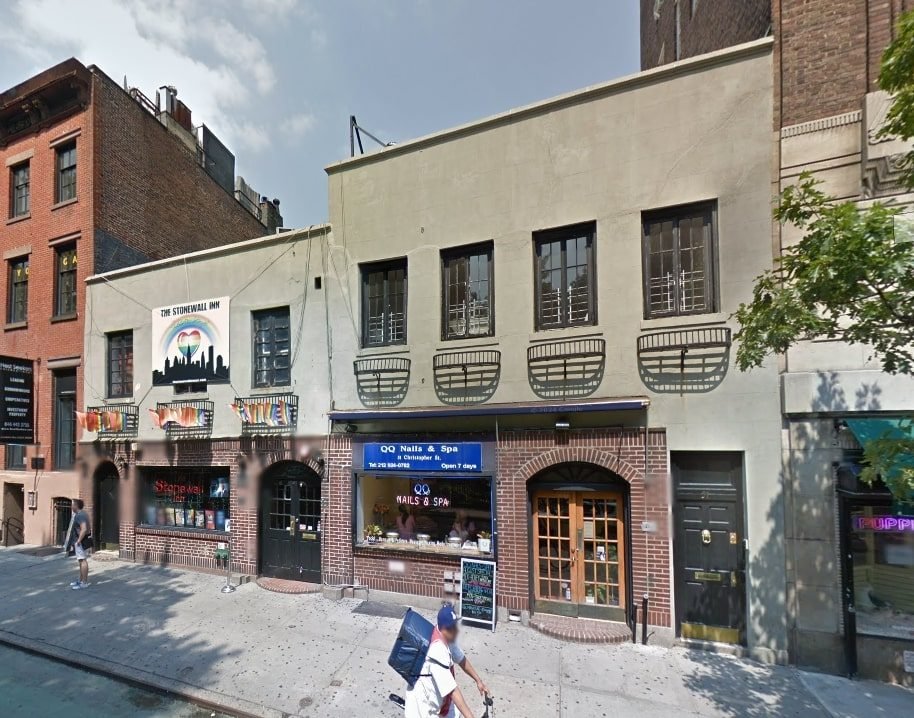
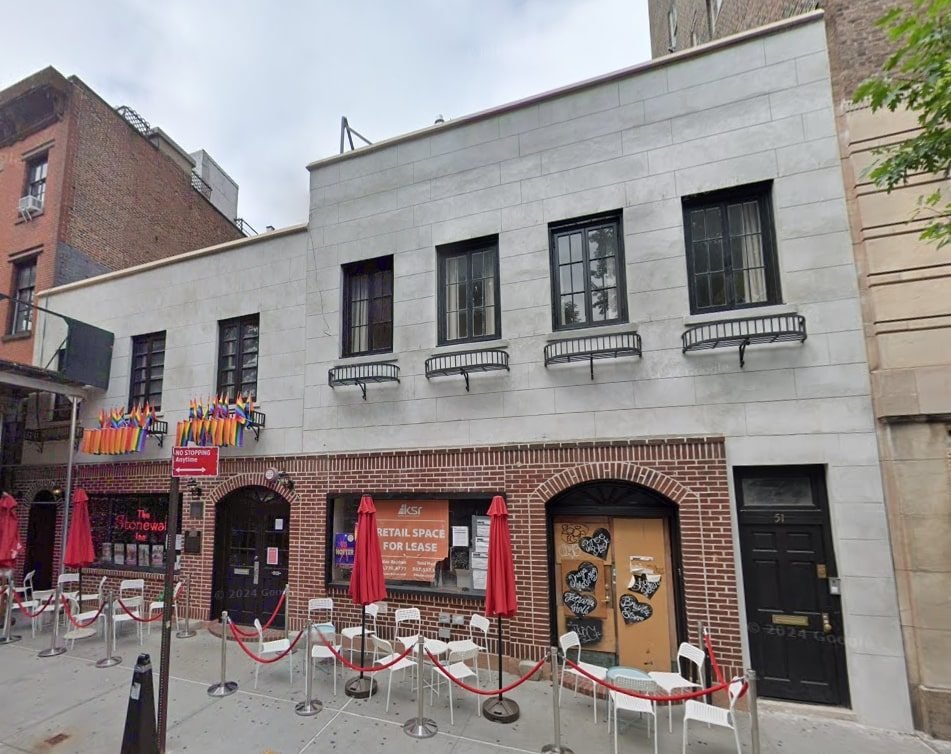
A two-story commercial and mixed-use building on Christopher Street in the Greenwich Village Historic District had a severely deteriorated exterior stucco render that was historically inconsistent with the surrounding district character. The building’s facade required complete replacement with an LPC-approved stone cladding system that would satisfy the Commission’s material and aesthetic requirements for this landmarked block while providing a durable, low-maintenance envelope for the next century.
MC Construction developed a specification for precision-cut limestone panel cladding anchored to a new structural support system attached to the existing facade substrate. The panel dimensions, joint profiles, and surface finish were designed to reference the material character of adjacent historic buildings on the block. A full LPC Permit to Perform Work application was submitted with material samples, installation method drawings, and photographic documentation of the proposed system installed on comparable buildings in the district.
The existing stucco render was fully removed and the substrate was repaired and waterproofed before panel installation began. Limestone panels were fabricated to specification at an LPC-approved stone fabricator, delivered to site in sequence, and installed using a concealed mechanical anchor system that allows for differential thermal movement without cracking the stone. All window surround details and base course transitions were hand-cut on site to achieve the precision fits required in the LPC-approved drawings. Work was completed in nine weeks under a DOB commercial alteration permit and a DOT scaffolding permit.
A fully approved and installed limestone facade that transformed one of the most visible buildings on a landmark Greenwich Village block. The LPC granted final approval without conditions. The building now presents a material character that is architecturally consistent with its historic context and requires no maintenance beyond periodic joint inspection. The project has since been referenced by the LPC as an example of appropriate material selection for commercial buildings in the Greenwich Village Historic District.

Every repair mortar specification begins with a petrographic analysis of the existing stone. We work with ASTM-certified conservation laboratories to formulate repair mixes that match the parent material in compressive strength, vapor permeability, color, and surface texture-the four criteria evaluated by LPC field inspectors.

We prepare complete LPC permit packages including existing conditions photography, material analysis reports, repair method statements, and mockup sample submittals. Our approval rate on first submission for Manhattan historic district stone projects exceeds 90%, avoiding the revision cycles that delay less experienced contractors.

Our stone crews are trained in hand-tooled profile repair, carved ornament replication, and surface finish matching using period techniques. We do not substitute power-tool finishes for hand work where the LPC specification requires traditional methods-a distinction that is visible to an experienced inspector from street level.

As a specialist manhattan townhouse renovation contractor for stone and masonry scopes, we have completed stone restoration projects on more than 200 Manhattan townhouses, co-op buildings, and commercial facades across all five historic district typologies. Our reference list includes buildings on the Upper West Side, Harlem, and Carnegie Hill.
What does a complete building stone envelope transformation look like in Manhattan?
A complete stone envelope transformation in Manhattan replaces a deteriorated or historically inappropriate facade cladding with precision-cut new stone panels that restore the building’s original material character, pass LPC review, and protect the underlying structure for generations. The Christopher Street project in Greenwich Village shows the before-and-after of one of our most comprehensive stone cladding installations in a Manhattan landmark historic district.
Christopher Street – Greenwich Village Limestone Facade Transformation
Bluestone Sidewalk Repair Manhattan New York – Stone Work Across All Scales
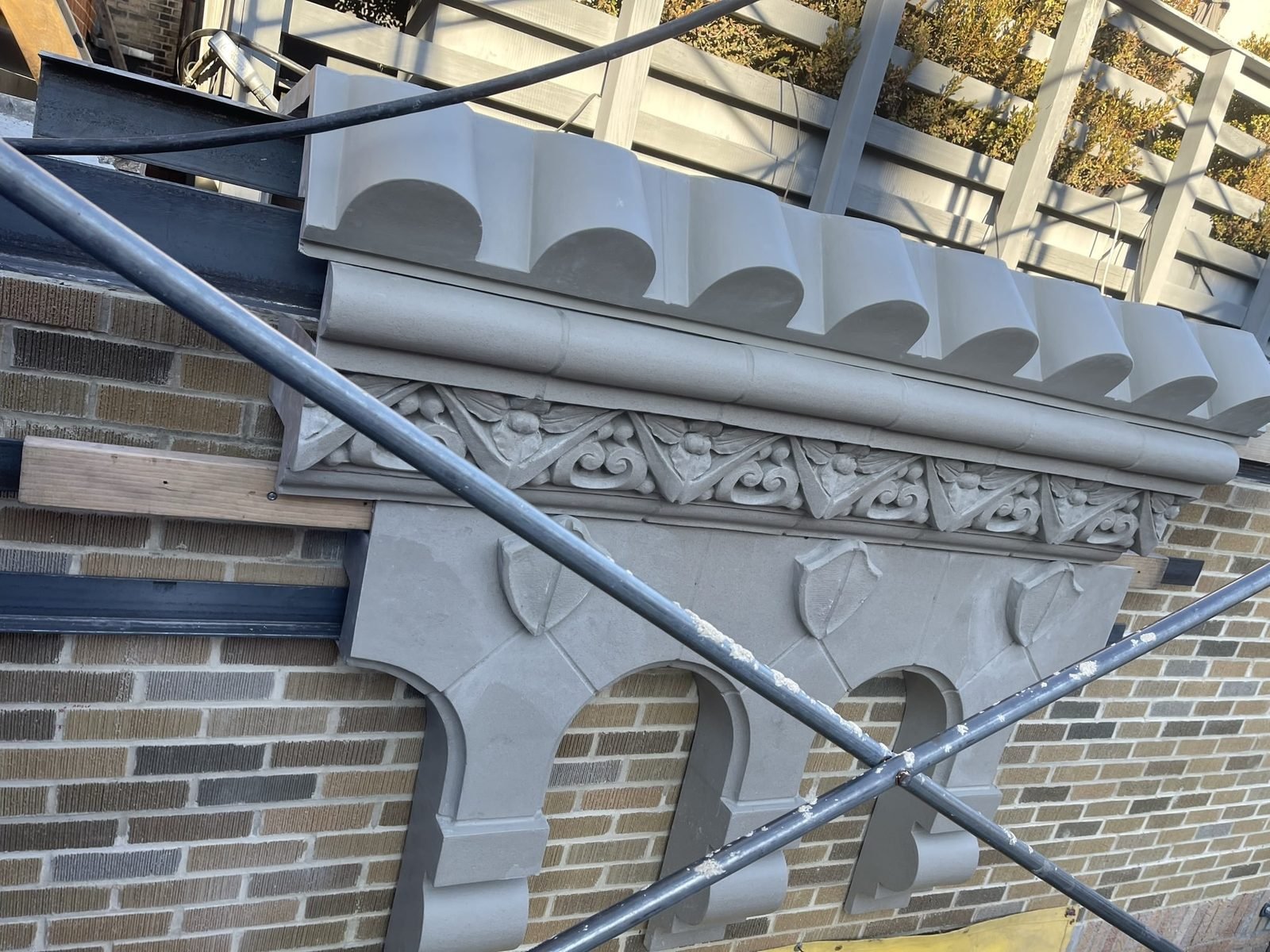
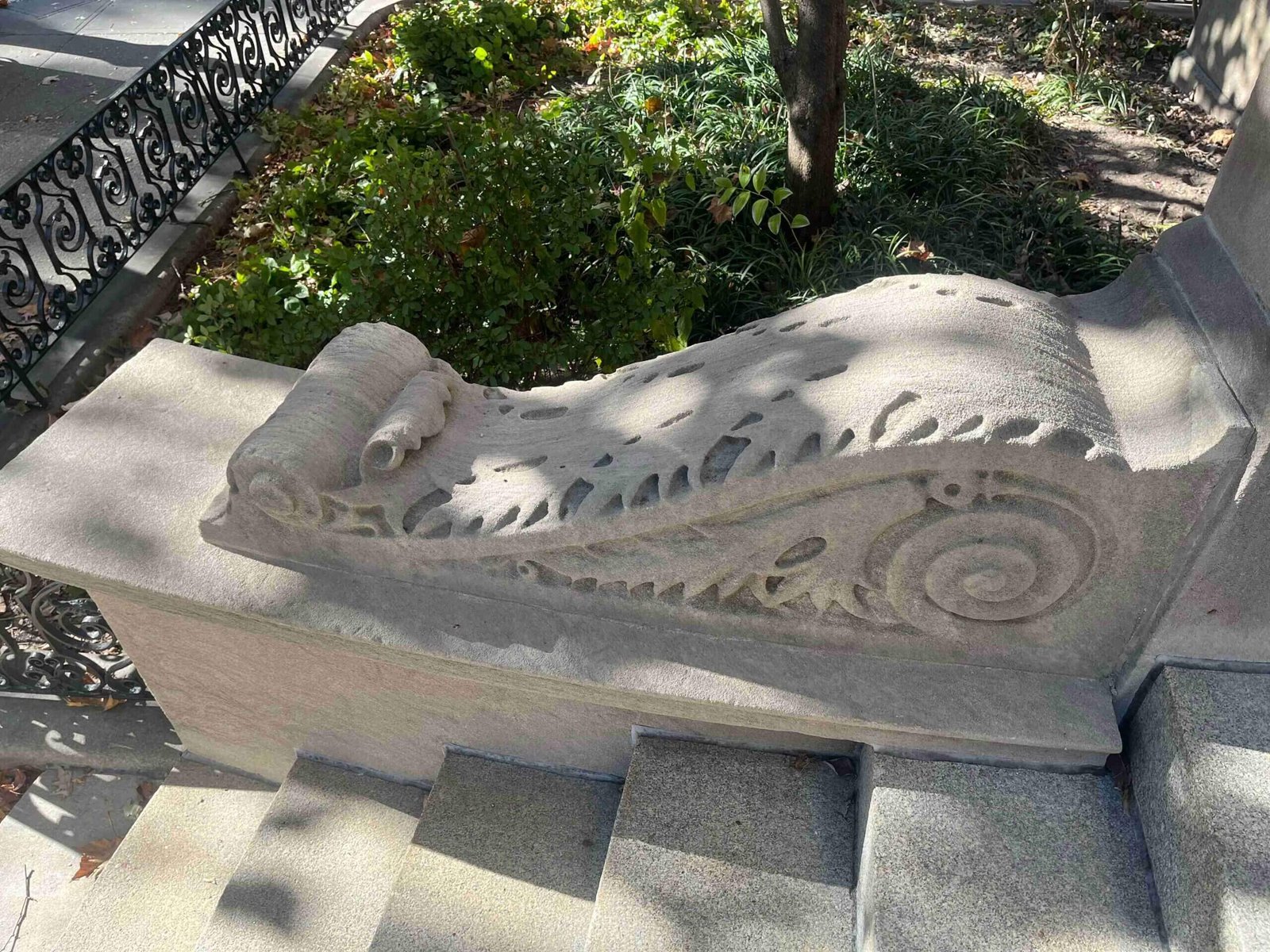
MC Construction’s stone restoration capability spans from the carved ornamental detail on a single brownstone capital to full courtyard and terrace stone installations for Manhattan penthouse properties. The images below show two representative completed projects: a newly carved and restored decorative limestone volute on a Manhattan townhouse stoop-replicated from the original profile using traditional hand-carving techniques-and a completed luxury Manhattan roof terrace featuring precision-set granite pool coping, large-format stone paving, and glass block skylight surrounds. For flagging and sidewalk work that complements restored stone stoops and base courses, we also offer specialist NYC concrete sidewalk repair coordinated with the stone scope under a single contract.

Which Manhattan neighborhoods does MC Construction serve for stone restoration?
MC Construction provides stone restoration services across all of Manhattan, with particular depth of experience in the historic districts where decorative stone work is most prevalent: Greenwich Village, the Upper West Side, Carnegie Hill, the Upper East Side, Riverside-West End Avenue, Harlem, and SoHo-Cast Iron. These districts contain the highest concentration of Manhattan’s pre-war limestone, sandstone, and cast stone facades, and their LPC oversight requirements make specialist contractor selection critical to project success.
We also serve buildings throughout Midtown and Lower Manhattan where stone facades appear on commercial, institutional, and civic structures. Our Maspeth facility allows us to pre-fabricate stone repair mortar batches and stage material deliveries to any Manhattan address on a same-day basis, critical for weather-sensitive stone repair operations where mortar consistency must be controlled from batch to application.

Let’s Build Your Next Project Together
Reach out to our experienced team for expert restoration and construction services across New York City’s boroughs.